| |
|
California Standards |
|
7.1 Rome |
|
7.2
Islam |
|
7.3
China |
|
7.4 Africa |
|
7.5 Japan |
|
7.6 Middle Ages |
|
7.7 Meso-America |
|
7.8 Renaissance |
|
7.9 Reformation |
|
7.10 Scientific
Revolution |
|
7.11 Age of Exploration |
|
|
|
|
|
|
|
Online Text Book |
|
|
|
|
|
Did you know? |
|
Pompeii was a Roman city destroyed
when Mt. Vesuvius erupted in A.D. 79.
|
|
|
|
|
First Semester |
|
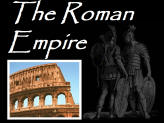 Rome Rome

Although the Romans are long gone, we still live with their
influences today - from religion to language to art and
architecture. Seventh grade Social Studies examines these
influences and how they traveled through time and across continents
and still impacts us today. It all begins here!
|
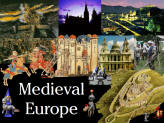 Middle
Ages Middle
Ages
Medieval Europe was quite
literally the land of fairy tales. Knights protected kings in
castles and told stories of epic battles with dragons. Robin
Hood infamously "robbed from the rich and gave to the poor."
And small towns built enormous cathedrals to worship God.
|
|
|
|
|
|
|
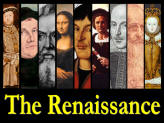 Renaissance Renaissance
During this "rebirth" of Rome, Europeans rediscovered greatness.
Christopher Columbus, Johannes Gutenberg, Michelangelo, Leonardo da
Vinci, William Shakespeare, Bloody Mary, and Elizabeth I are some of
the interesting characters you will meet.
|
 The
Reformation The
Reformation
In the late 1400s and early 1500s, the Catholic Church struggled to
find its way. Men such as Martin Luther, Henry VIII, and John
Calvin challenged the Pope's power and changed the world forever.
|
|
|
|
|
|
|
 The
Scientific Revolution The
Scientific Revolution
Science was invented with the
hard work of Michelangelo, Leonardo da Vinci, Sir Isaac Newton,
Nicolai Copernicus, and Galileo Galilee. These men dared to
questioned the established beliefs and test their theories,
understanding the world like never before. |
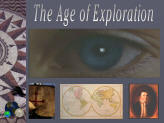 The
Age of Exploration The
Age of Exploration
In the 1400s, 1500s, and 1600s, England, France, the Netherlands,
Portugal, and Spain began to explore the world and set up colonies
in Africa, Asia, the Americas. These colonists devastated the
native populations and installed their language, beliefs, religion,
and system of government.
|
|
|
|
|
|
|
|
|
Second Semester |
|
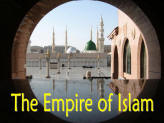 Islam Islam
Founded by Muhammad around A.D. 610, Islam is the world's second
largest religion after Christianity. While Europe languished
for a thousand years during the Middle Ages, the Muslims cataloged
and built on the ideas of the Romans. It is from this culture
that we have algebra, the lemon, and the guitar.
|
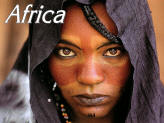 Africa Africa
Coming Soon!
|
|
|
|
|
|
|
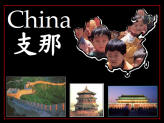 China China
Founded by Emperor Qin (Chin)
over 4000 years ago, China has flourished through the years, making
it one of the world's oldest lasting civilizations. From
before Rome to the present day, China has endured. China is
and will remain one of the most influential countries in the world
today.
|
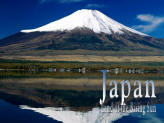 Japan Japan
Home of sushi, sumo, and samurai,
Japan is one of the world's most remarkable countries.
|
|
|
|
|
|
|
 Mexico Mexico
Coming Soon!
|
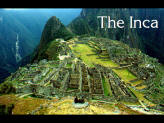 The
Inca The
Inca
Coming Soon!
|
|
|
|
|
|
|
|
|
More
Information |
-
Rome is responsible for nearly destroying Christianity, then
embracing it and expanding it throughout the empire.
-
Abraham, Moses, and Gabriel are part of Christianity, Judaism,
and Islam.
-
Africans actually traded gold for salt.
-
More than 1,500,000,000 people live in China. That's 1/4
of every person on Earth!
-
Japan is known as the Land of the Rising Sun.
-
Many cathedrals in Europe took over 100 years to build.
-
Leonardo da Vinci was known as a painter, inventor, and
scientist.
-
In 1607, John Smith helped established the first permanent
English colony in Jamestown Virginia.
-
The Maya are one of only five civilizations in the history of
the world to invent a written language.
 |
|
|
|